It’s 2026, and while we’re currently diving into the latest phased-reality battle passes, I still find my finger swiping longingly through my old battle logs. There’s one season that truly \u201cThe Man\u201d never revisited, and frankly, it deserves more than a nostalgia trip. Let me take you back to a time when a chunk of the planet was obsessed with post-human philosophy while trying to survive a shrinking circle. I am talking, of course, about the legendary Season 7: New Vision City. I still remember the date: August 3rd, 2022, around 5 PM PT. I logged in expecting the usual boom-boom action, but the game hit me with something else entirely\u2014a full-on anime fever dream.
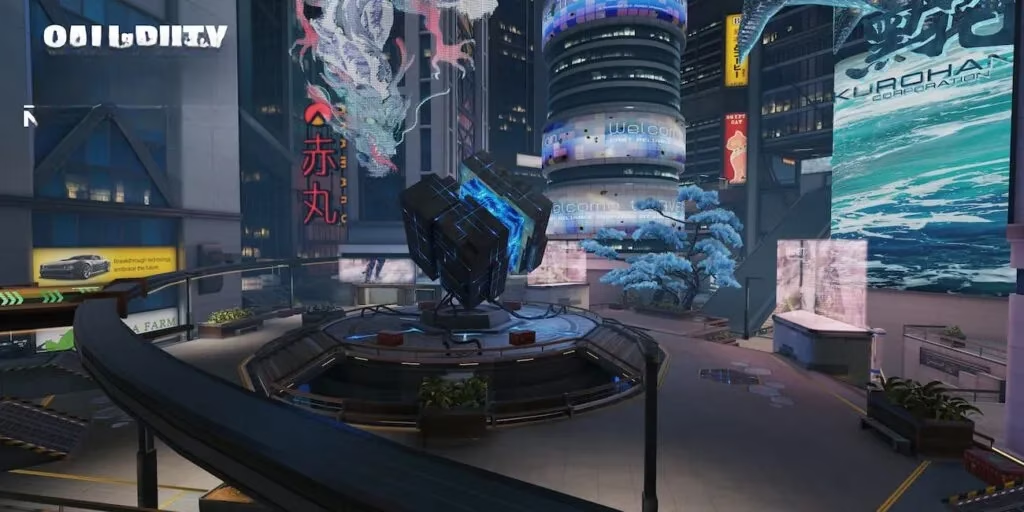
The moment I dropped into Isolated, I wasn\u2019t just a soldier; I was a fan. The collaboration with GHOST IN THE SHELL: SAC_2045 wasn\u2019t just a skin-deep cash grab. It was immersive. I spawned into eternal darkness, lit only by high-rise holograms and the menacing glow of neon lights. Right off the bat, I went straight for the cash to grab that Battle Pass because, let\u2019s be real, I had to run around as Motoko Kusanagi. The premium pass back then gave us Blackjack \u2013 Elite, Stryker \u2013 Interface, and Battery \u2013 EVE-III. But the ultimate prize? Snagging Motoko herself was a flex I\u2019m still living. \u201cYou never go full robot in a firefight.\u201d Well, actually, maybe you do.
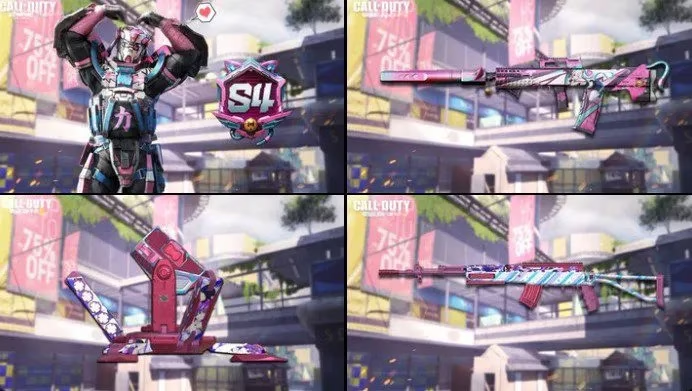
But the shiny operator gear was just the tip of the iceberg. The gameplay loop got a serious overhaul. Instead of the tired old dog tags, we were scrambling to collect the \u2018ghosts\u2019 of our fallen teammates to reprint them back into the game. It felt so slick and futuristic. And the loot? Oh man, the city was crawling with PVE enemies\u2014nasty AI robots and mechanical dogs that actually hit hard. But beating them meant you could salvage parts and head over to the Redeem Facility for Cyberware Enhancements. I became obsessed. You had four choices: the Cyberbrain Drone to hack terminals, the Ocular System to expose nearby enemies, Cyberbody Limbs to launch a deadly aerial melee attack, or the Neuro Systems to essentially give you aimbot-lite. I usually went with the Ocular System because knowing where the campers were hiding in the neon haze was just chef\u2019s kiss.
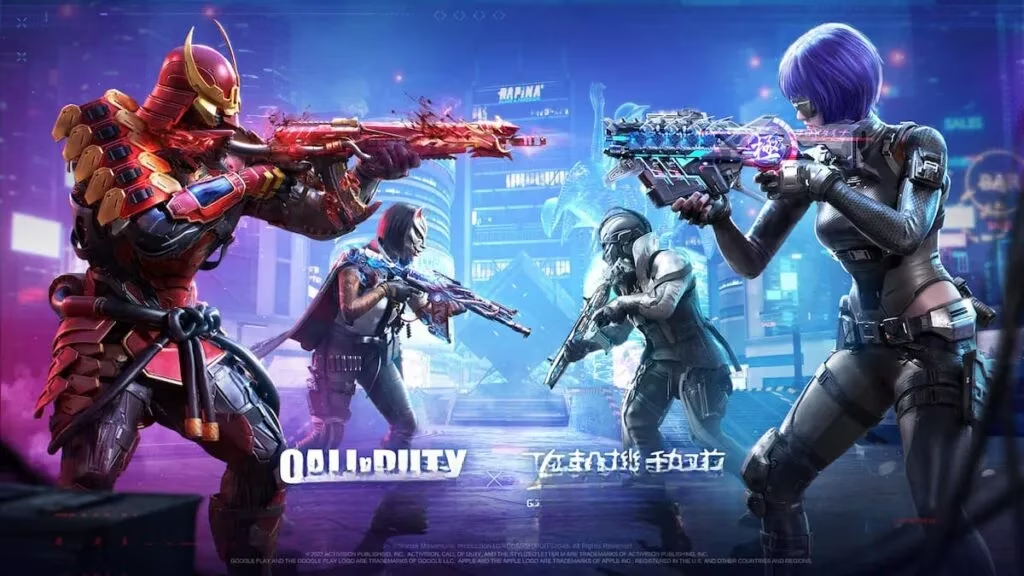
The grind that season felt fair, though. I was hustling through the free tiers. Hitting Tier 14 meant I finally unlocked that wild new Claw Operator Skill, a gun that fired ricochet ballistic rounds. It was every bit as chaotic as it sounds. But the real game-changer for me was the Switchblade X9 SMG at Tier 21. A foldable, compact little beast that I still use in my loadouts today. Sure, the free camos and Weapon Blueprints were nice, but that SMG defined close-quarters combat for the rest of the year.
Of course, you can\u2019t talk about a massive Season 7 without talking about the weapon balance, because lord knows that meta shifted harder than the tectonic plates. I remember the CBR4 crying in the club after the nerf hammer came down. They increased the ADS bullet spread and sprint-to-fire delay, which meant my hip-fire crutch was gone. Meanwhile, the PP19 Bizon got a sneaky range buff, and the QQ9 started hitting so hard at close range that people with the MAC-10 finally had something to worry about. \u201cBalancing is an art,\u201d I muttered as I witnessed the S36 light machine gun getting a massive horizontal recoil reduction. It was beautiful chaos. Almost every assault rifle, from the AK117 to the DR-H, got a little steroid shot, pulling them out of the shadow of the SMG meta. Even the M4, the trusty noob-tube, finally got a damage and range bump that made it viable again.
But the ranked experience? That was a rollercoaster. The devs split the map pool into a \u2018Generic\u2019 and \u2018Seasonal New Map\u2019 pool, which was a fancy way of saying if you clawed your way to Pro Rank, you were thrown to the wolves on new maps like Apocalypse. It was stressful, but the Ranked Protection system was a lifesaver. If you got queued into a fresh map and lost, the losing team still got an XP bonus, which honestly stopped me from throwing my phone out the window. They also prioritized legendaries sticking with other legendaries, so I didn\u2019t have to carry (or get yelled at by) Master Rank players. It felt like they actually wanted me to touch grass between seasons instead of just raging.
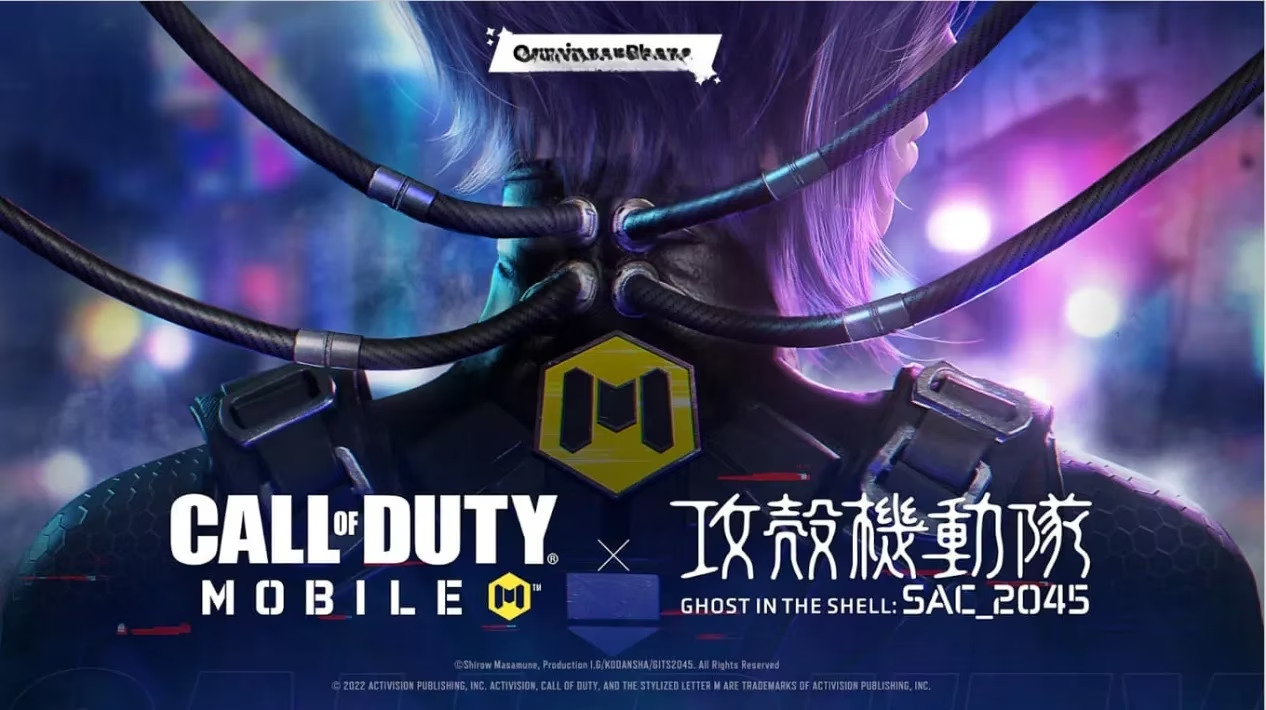
The little details amplified everything. The Mythic weapon share projection system finally allowed me to let my teammates borrow my max-level guns, though I\u2019d often joke that they\u2019d drop it three times and it would disintegrate into a basic shape. The Dead Silence and Hardline perk nerfs meant I had to actually think about my footsteps and operator skill charge times instead of mindlessly rushing. And the battle royale classes? The new Profession System totally re-contextualized my choices. I moved away from Ninja purely for the silent steps and embraced Poltergeist just to troll people with a movement speed buff after activation. \u201cPopping smoke and dipping out,\u201d became my mantra.
Honestly, as we sit here in 2026, the landscape of mobile shooters keeps changing, but that synthetic, purple-hued season remains a masterclass in collaboration. The Game over screen brought a Tachikoma, I was zipping around in a Rally Car while wearing an Echo Grenade skin, and for a brief moment, a mobile game made me feel like I existed inside a 4D network. New Vision City wasn\u2019t just an update; it was an invitation to rethink how aggressive, augmented, and awesome a battle royale could truly be.
The following analysis references CNET - Gaming to frame why COD Mobile Season 7: New Vision City landed as more than a cosmetic crossover: it blended tech-forward theming (cyberware-style enhancements, hologram-heavy ambience, and a “reprint” revival mechanic) with meaningful system changes that affected moment-to-moment decision-making in BR. Seen through that lens, the Ghost in the Shell collaboration worked because the futuristic presentation was reinforced by gameplay loops—risking PVE robot fights for upgrades, choosing enhancements like Ocular scanning for information advantage, and adapting to balance shifts that reshaped close-range fights around staples like the Switchblade X9.