Ever since its global debut in October 2019, Call of Duty Mobile has remained a dominant force in the mobile gaming landscape. The game’s seamless blend of classic Multiplayer action and an expansive Battle Royale mode captured the attention of millions, building a vast and dedicated player base. Developers consistently pushed updates, introduced new maps, weapons, and seasonal content to keep the experience fresh. One of the most memorable moments in the game’s early lifespan came toward the end of 2020, when Activision teased the arrival of a fan‑favorite location reimagined for a new era.
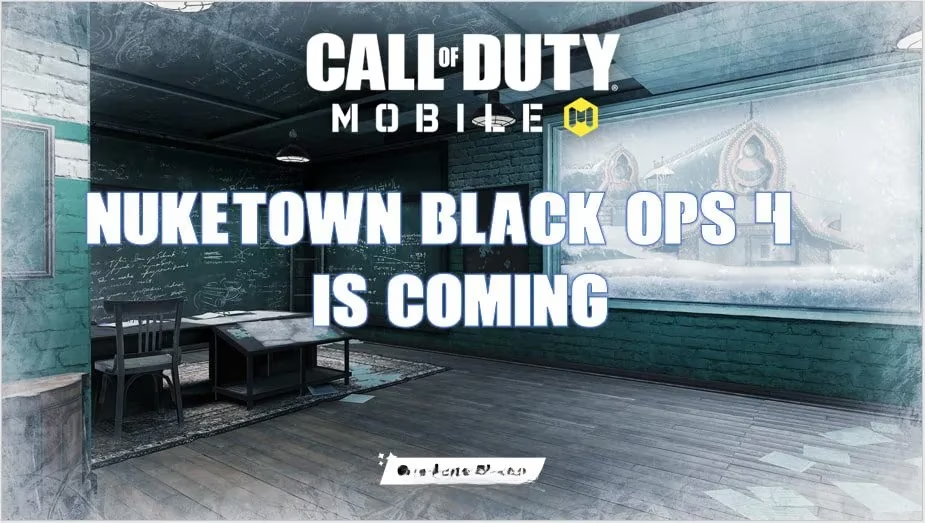
In late November 2020, the official Call of Duty Mobile Twitter account posted a cryptic message accompanied by a snowy backdrop and the text: “🥶❄ Bundle up! It has been getting quite chilly lately… Coming to #CODMobile in the next season!” The short teaser created an immediate buzz, as players quickly recognized what was on the horizon. It was not just any map—it was a rendition of Nuketown, but with a distinct twist. This was the Nuketown map from Call of Duty: Black Ops 4, a Soviet‑era re‑imagining that traded the familiar suburban desert testing ground for a frozen, missile‑silo‑infused battlefield.
Nuketown had already been a staple in Call of Duty Mobile since its early days, with a more traditional version playable in Multiplayer. The Black Ops 4 variant, however, was a substantial departure in both aesthetics and atmosphere. Instead of the sunny, mid‑century American mannequin neighborhood, this map unfolded at a Russian nuclear missile testing site during the Cold War. Snow blanketed every surface, the buildings featured Soviet‑inspired architecture, and an eerie sense of abandoned secrecy hung in the air. The map’s arrival in Season 13 of Call of Duty Mobile gave both veterans and newcomers a fresh way to experience a classic layout.
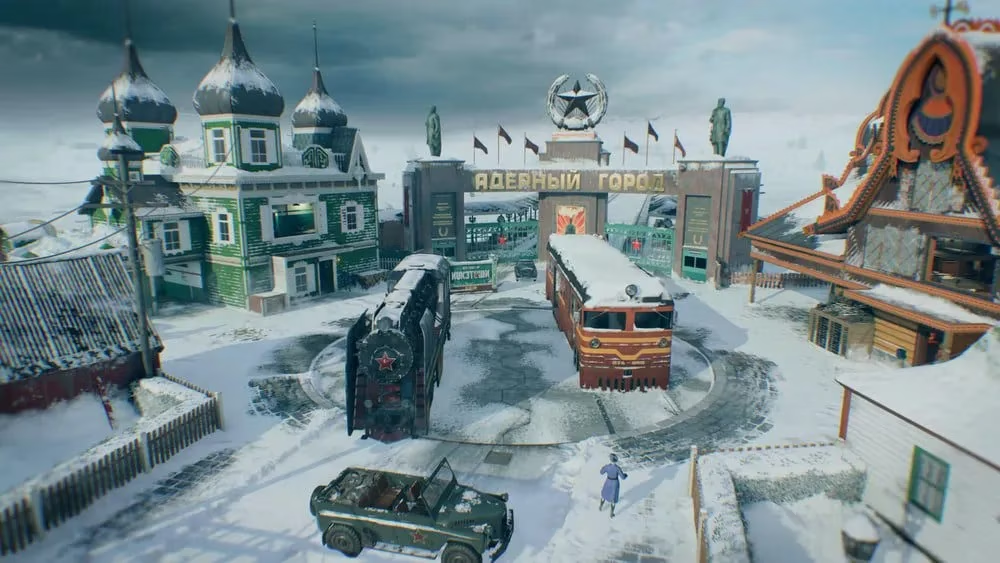
Although the fundamental structure remained faithful to the original Nuketown design, the Black Ops 4 version introduced several gameplay‑altering elements. The central train area, which players could traverse, had an open door that blocked the long‑range sightline previously found near the B flag position in older iterations. This subtle change forced players to adopt more aggressive flanking strategies rather than holding down a single lane with a sniper rifle. Additionally, the infamous RC‑XD passage still existed but now led underground to a massive missile silo. Inside that silo, a warhead sat ready for launch, a visual reminder of the high‑stakes Cold War narrative. At the end of a match, the silo doors in the center of the map would dramatically open, the warhead would launch, and a jeep would be sent flying off the ground in a fiery spectacle.

The addition of this snowy Nuketown was more than just a cosmetic overhaul—it was a strategic expansion of Call of Duty Mobile’s map pool at a time when the game was still cementing its identity. Season 13 arrived during a period of rapid growth, and the inclusion of a well‑loved Black Ops series location helped bridge the gap between console nostalgia and mobile accessibility. Players who had spent countless hours on the console version of Black Ops 4 immediately recognized the cold, gray skies and the revamped interiors, while newer mobile gamers were treated to an intricate close‑quarters map that rewarded both fast reflexes and clever positioning.
The 2026 perspective on this map only reinforces its legacy. In the years since its introduction, the Black Ops 4 Nuketown has become a permanent fixture in Call of Duty Mobile’s map rotation. It frequently appears in ranked playlists, themed events, and seasonal challenges. The map’s compact size makes it perfect for quick‑paced Domination, Hardpoint, and Team Deathmatch rounds, while the snowy aesthetic continues to stand out against the brighter, more colorful maps added later. Its release also set a precedent for how Call of Duty Mobile would handle remakes—reinterpreting classic maps with fresh themes without sacrificing the core layout that made them legendary.
Looking back, the tease in November 2020 was a masterclass in community engagement. At the time, players had no official release date; the only clue was the promise of “next season.” Discussion threads across social media and forums erupted with speculation about whether the map would include the missile launch animation, whether the RC‑XD tunnel shortcuts would still work, and how the snow would affect visibility. When the map finally dropped, it exceeded expectations. The underground silo became an instant hotspot for ambushes, and the closing cinematic gave every match a satisfying theatrical finish.
Call of Duty Mobile’s developers deserve credit for maintaining the spirit of Nuketown while adapting it to fit the mobile platform. Performance optimization on a vast range of devices meant that the snowy particle effects, the silo animation, and the explosive finale had to run smoothly even on mid‑range smartphones. The team managed to deliver a visually striking experience without compromising frame rates, a factor that contributed to the map’s long‑term popularity.
As of 2026, the Black Ops 4 Nuketown map remains a beloved piece of Call of Duty Mobile history. It represents a moment when the game fully embraced its cross‑generational appeal, pulling a classic from the console archives and making it feel at home on touchscreens. For players who first encountered Nuketown on their phones, the snowy variant is often their definitive version—a frozen battleground where every corner holds a potential firefight, and every match ends with a rocket tearing through the sky.